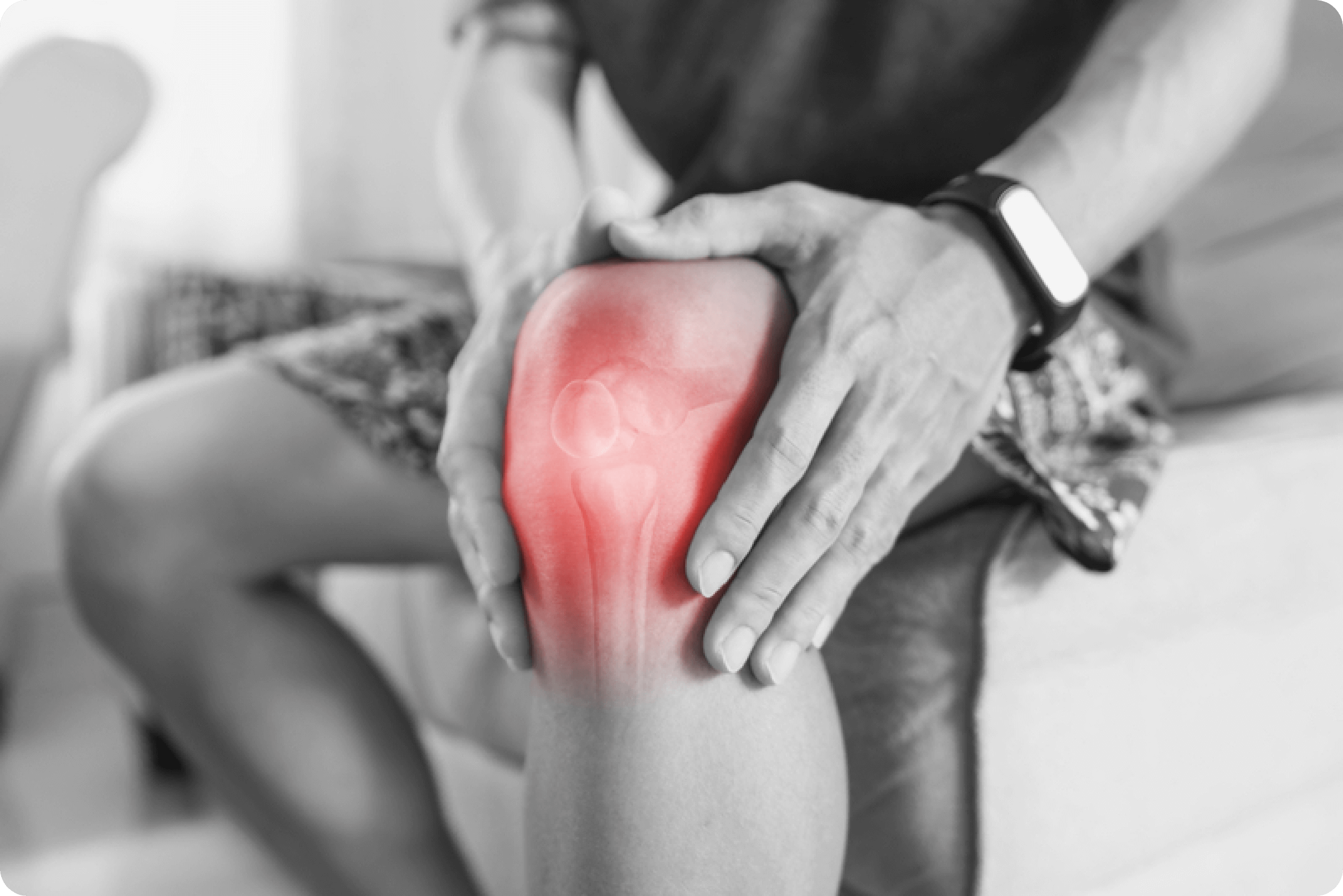
Living with chronic knee pain can affect every part of your life, from walking and exercising to enjoying daily routines. If your pain or stiffness is limiting mobility, it may be time to explore your knee replacement options. At the Northampton Hip & Knee Clinic, consultant orthopaedic surgeon Mr Pierre Nasr provides personalised care for every stage of your knee replacement journey, helping you regain comfort, confidence, and mobility through expert treatment and compassionate guidance.
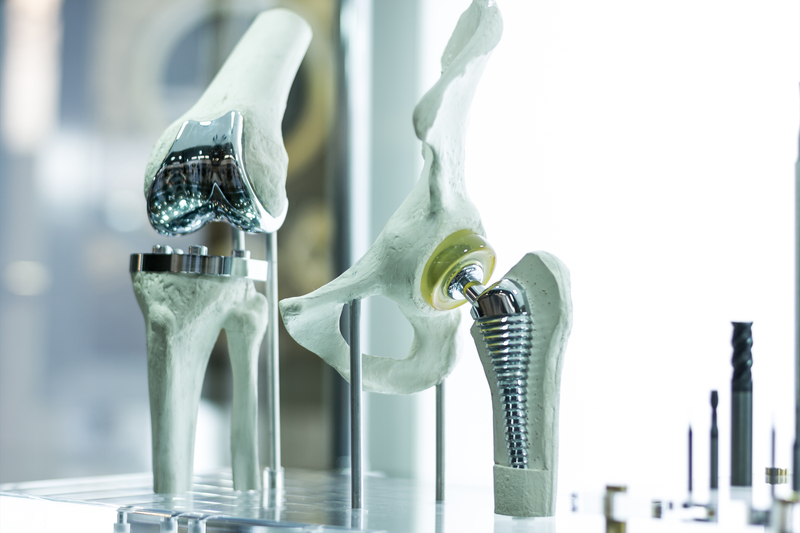
As your dedicated consultant, Mr Nasr manages your entire knee replacement journey, from pre-operative assessment through to post-surgery care and rehabilitation.
By choosing a specialist orthopaedic knee surgeon, you benefit from:
Knee replacement surgery (also called knee arthroplasty) involves replacing the worn or damaged parts of your knee joint with artificial implants to relieve pain and restore smooth movement.
At the Northampton Hip & Knee Clinic, we offer a complete range of surgical knee replacement procedures:
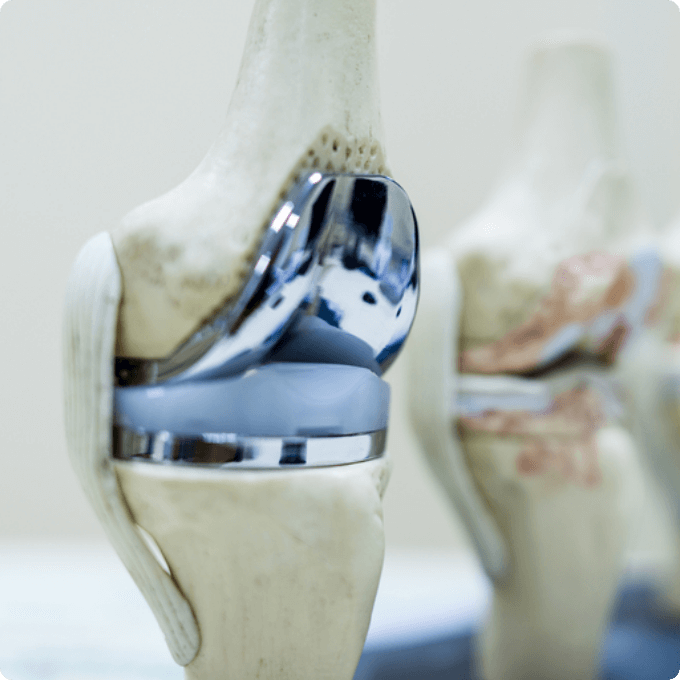
A total knee replacement (TKR) is the most common procedure and is used when two or more compartments are arthritic, or when stiffness, deformity or instability mean a partial replacement would not provide a reliable result. In a TKR, the worn surfaces at the end of the femur and top of the tibia are replaced with metal and polyethylene components. In selected cases, the underside of the kneecap is resurfaced as well.
Modern implants are durable and designed to produce smooth, stable movement. Techniques such as computer navigation or patient-specific instrumentation help improve alignment accuracy. A TKR is usually recommended when arthritis is widespread, when ligaments are weak, when there is significant deformity or when inflammatory arthritis is present. It provides strong, predictable long-term pain relief for most patients.
Find Out More
A partial knee replacement (also called a unicompartmental knee replacement) resurfaces only the diseased part of the knee while preserving the healthy bone, cartilage and ligaments. Because much of the natural knee remains intact, it can feel more “normal” than a total knee replacement in suitable candidates.
Patients often experience a quicker recovery, less pain in the early phase and more natural knee movement. It is most appropriate when arthritis is confined to one compartment, the cruciate ligaments are intact and the knee is not severely stiff or deformed. Clear, well-defined disease is essential. If arthritis later develops in other compartments, conversion to a total knee replacement is straightforward.
A patellofemoral replacement is a specialist partial replacement used for isolated wear of the kneecap and its groove. This pattern of arthritis typically causes severe anterior knee pain when using stairs, slopes or rising from a chair. The operation resurfaces the back of the patella and the trochlear groove of the femur, leaving the rest of the knee untouched.
Because the major ligaments are preserved and only the affected area is treated, the knee can feel very natural and recovery is often quicker than with a full replacement. However, this option is only suitable when the remainder of the knee is healthy, so careful assessment and imaging are essential.
Selecting between total, partial and patellofemoral knee replacement depends on which compartments are affected, the condition of the ligaments, degree of deformity, activity level and imaging findings. We always discuss all appropriate options and recommend the operation that provides the safest and most reliable long-term outcome.
You might require knee replacement if you are experiencing the following:
You may be suitable for knee replacement surgery if pain, stiffness or loss of function are starting to limit normal daily life, despite appropriate non-operative treatment. Typical signs include:
Persistent knee pain
Pain that interferes with walking, stairs, daily tasks or sleep, even after medication or physiotherapy.
Arthritis confirmed on X-ray
Evidence of osteoarthritis, rheumatoid arthritis or post-traumatic arthritis affecting one or more compartments of the knee.
Instability or “giving way”
A feeling that the knee cannot be trusted, especially on uneven ground or when descending stairs.
Reduced ability to perform everyday tasks
Difficulty with standing, shopping, work, exercise or hobbies due to knee pain or stiffness.
Stiffness and swelling
Reduced ability to bend or straighten the knee, often accompanied by recurrent swelling that restricts activity.
Joint deformity
Increasing bow-legged or knock-kneed alignment, which often reflects progressive cartilage loss and can lead to instability.
Failure of non-surgical treatments
Limited or no improvement despite physiotherapy, weight optimisation, anti-inflammatory medication, bracing or joint injections.
If you’ve had a failed knee replacement or an implant that has loosened over time, revision or a second knee replacement surgery can restore comfort and function.
Being well prepared makes a significant difference to recovery. Patients who go into surgery fitter, stronger and well informed tend to mobilise earlier and have fewer complications. Preparation usually includes:
Your knee replacement is performed under general or spinal anaesthesia, often with additional nerve blocks for improved comfort afterwards. On the day:
Mr Pierre Nasr uses modern knee replacement systems with proven long-term performance and excellent outcomes on the National Joint Registry (NJR). Techniques include:
Each prosthesis is selected to provide durability, stability and the most natural knee motion possible.
Although every patient progresses at their own pace, enhanced recovery protocols help ensure a safe and predictable return to movement:
We use minimally invasive surgical techniques, modern anaesthesia and evidence-based pain control to support a smoother recovery and shorter hospital stay.
Prepare yourself for the surgery
Mr Pierre Nasr focuses exclusively on hip and knee procedures, offering high-volume surgical expertise.
You’ll have one-to-one attention from your first consultation through recovery.
Including robotic, keyhole (arthroscopic) and minimally invasive knee surgery.
Fast access to surgery, diagnostics, and physiotherapy.
High satisfaction and rapid return to active life.
Our dedication to outstanding care is evident in the stories of our patients. Explore how our treatments have significantly improved lives, offering relief and restoring mobility for individuals just like you.
Knee replacement is a planned, considered procedure. The focus is on restoring mobility, reducing pain, and allowing you to return to the activities that matter most to you.
If you’re struggling with knee pain or stiffness, don’t wait for things to worsen. Book your private consultation with Mr Pierre Nasr to discuss whether knee replacement surgery is right for you.
We’ll review your scans, discuss non-surgical options (like hyaluronic acid knee injections or physiotherapy), and help you take the next step towards pain-free movement.
Yes, modern knee arthroplasty is one of the most successful orthopaedic surgeries, offering over 90% success rates and long implant lifespans.
As with any surgery, risks include infection, blood clots, stiffness, persistent pain, or implant loosening. These are rare and minimised by careful surgical planning and rehabilitation. Mr Nasr will go through in detail with you and personalise the risks involved.
Most patients walk within 8 hours and resume normal activities by 6 weeks, depending on fitness and pre-existing conditions.
While uncommon, some implants may wear out over time. If this happens, a revision or second knee replacement can restore function.
Yes, including partial, total, robotic assisted (using the same implants), and minimally invasive approaches. Your consultant will recommend the best type for your knee and activity level.
Most patients can kneel comfortably after recovery, though it may feel different at first. Regular physiotherapy and flexibility exercises help.
Some discomfort is expected in the early stages, but this is well controlled with modern pain management techniques. Most patients notice a steady improvement, and the pain is typically far less than the arthritis pain they experienced before surgery.
Most modern knee replacements last 15–20 years or longer. Longevity depends on activity levels, body weight, and overall health.
Patients can usually return to driving at around 4–6 weeks, once they are comfortable, mobile, and able to perform an emergency stop safely.
This varies depending on your role. Office-based work is often possible within 4–6 weeks, whereas more physically demanding jobs may take 8–12 weeks or longer.
Yes. Rehabilitation is essential to achieving the best outcome. A structured physiotherapy programme helps restore movement, strength, and confidence in the knee.
Low-impact activities such as walking, cycling, swimming, and golf are encouraged. High-impact sports are generally avoided to help protect the longevity of the implant.
Yes, but every effort is made to keep the incision neat. Over time, the scar usually fades and becomes less noticeable.
Knee arthritis typically worsens over time. Pain, stiffness, and reduced mobility may gradually increase. Non-surgical treatments can help manage symptoms, but they do not reverse the underlying condition.
There is no strict age limit. The decision is based on symptoms, overall health, and how much your knee is affecting your quality of life rather than age alone.
Over 90–95% of patients experience significant pain relief and improved function following surgery.













© 2026 Northampton Hip and Knee Clinic. All rights reserved. Registered Number: 10536384
Website Design & Marketing by Loop Digital.