Knee joint injections are a common, non-surgical option for diagnosing and relieving knee pain, especially for individuals suffering from arthritis or other joint conditions. These injections are performed without the need for x-ray guidance, making them a straightforward procedure that can provide significant relief for certain patients.


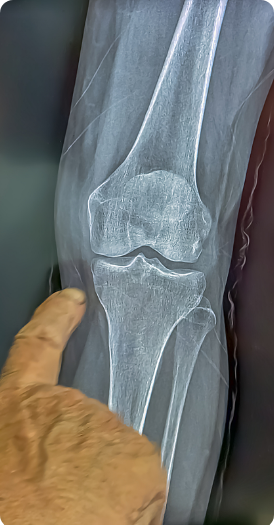
How Knee Injections Are Performed: For hip injections ultrasound or X-ray guidance is used to gain access to the hip joint, Mr Nasr will insert a small needle into the joint. Knee injections are often carried out in the outpatient department, sometimes on the day of your initial appointment if there is an available slot with the nursing staff. Once the needle is correctly positioned, the medication will be slowly injected into the joint. The amount of medication injected is typically small, usually around 10 millilitres. The needle will be removed, and a small dressing will be applied.
Most patients report minimal discomfort during the procedure. The skin can be numbed with a local anaesthetic before the joint injection, which helps minimise pain but is usually very well tolerated by just inserting the small needle. You may feel some pressure or mild discomfort as the medication is injected into the joint space.
Candidates for Injections: Knee joint injections may be suitable for individuals with osteoarthritis, rheumatoid arthritis, post-traumatic arthritis, or other inflammatory conditions affecting the knee joint. Patients who have not responded well to oral pain medications, physical therapy, or lifestyle changes may also consider injections as a treatment option.
Not for Everyone: While knee injections can be effective for many, they may not work for all patients. People with advanced arthritis, for example, may not experience significant relief and might be better suited for surgical interventions, such as knee replacement.
Infection: Although rare, there is a risk of infection at the injection site. Proper sterile techniques reduce this risk, but patients should monitor for any signs of infection, such as redness, swelling, or fever.
Allergic Reactions: Although uncommon, some individuals may have an allergic reaction to the injected substances, particularly to hyaluronic acid or other components of the injection.
Temporary Pain or Swelling: Some patients may experience mild pain, swelling, or discomfort at the injection site shortly after the procedure. This usually subsides within a few days.
Knee joint injections offer a valuable, minimally invasive treatment option for managing knee pain and improving quality of life. Whether for diagnostic or therapeutic purposes, these injections can play a significant role in treating knee conditions, particularly arthritis. It is important to consult your doctor to determine the most appropriate injection and treatment plan for your individual condition.
At Northampton Hip and Knee Clinic, we pride ourselves on providing exceptional care for hip and knee conditions. Here's why you should choose us.
Mr Pierre Nasr has extensive experience in hip and knee treatments, performing hundreds of hip and knee procedures annually.
As a specialist in hip and knee surgeries, Mr Nasr brings a depth of knowledge to every case.
We tailor our approach to each patient's unique needs and circumstances.
Our clinic consistently achieves excellent results, with high patient satisfaction rates.
Our dedication to outstanding care is evident in the stories of our patients. Explore how our treatments have significantly improved lives, offering relief and restoring mobility for individuals just like you.
Mr Pierre Nasr, MBBS BSc Dip IMC RCS (Ed) FRCS (Tr&Orth), is a Consultant Trauma and Orthopaedic Surgeon with extensive experience in hip and knee replacements and fracture management. His expertise ensures you receive the highest standard of care at Northampton Hip and Knee Clinic.
Remote Consultations for Hip and Knee Pain and Lower Limb Trauma
Experiencing hip or knee pain or a recent lower limb injury? You no longer need to wait for in-person appointments to receive expert advice and care. At Northampton Hip and Knee Clinic, we offer remote consultations that allow you to discuss your condition with our specialist team from the comfort of your own home.
For more information about fracture treatment or to schedule a consultation with Mr Nasr, please contact us:
A knee joint injection involves administering medication directly into the knee joint to relieve pain, reduce inflammation, or help confirm the source of your symptoms. Most knee injections can be performed accurately without X-ray or ultrasound guidance because the knee joint is readily accessible. However, ultrasound guidance can sometimes be useful depending on the individual circumstances. The procedure is usually quick and straightforward and is performed as an outpatient. In some cases, an injection can be carried out on the same day as your initial consultation.
Most patients experience only minimal discomfort. The skin can be numbed with a local anaesthetic beforehand, and the needle used is small. You may feel some pressure as the medication is injected, but the procedure is generally very well tolerated. Any mild soreness at the injection site usually settles within a day or two. The entire procedure typically takes only a few minutes.
Knee injections may be suitable for people with osteoarthritis, rheumatoid arthritis, post-traumatic arthritis, or inflammatory knee conditions who have not found sufficient relief from oral pain medication, physiotherapy, or lifestyle changes. They can also be used in advanced arthritis to provide temporary symptom relief, although the response may be less predictable. Mr Nasr will assess whether an injection is appropriate for you during your consultation. An injection would not be performed if there is an active infection.
Knee injections can provide useful symptom relief and may allow some patients to postpone surgery. They do not cure or reverse arthritis, however, and patients with progressive or advanced arthritis may ultimately require knee replacement.
One of the benefits of knee injections is the relatively short recovery period. Most patients can return to normal day-to-day activities soon afterwards, although it is generally advisable to avoid strenuous exercise or heavy manual work for around 24 to 48 hours. You can usually drive once you are comfortable, the effects of any local anaesthetic have fully worn off, and you can safely control the vehicle and perform an emergency stop.
Knee injections are considered very safe when performed by an experienced specialist. Possible side effects include temporary soreness or swelling following the injection, and steroid injections can occasionally cause a temporary flare in pain. In people with diabetes, steroids may also temporarily increase blood glucose levels. Infection following a joint injection is possible but very rare. Repeated steroid injections are used cautiously, and Mr Nasr will discuss the relevant risks and benefits with you before treatment.
The two commonly considered options are corticosteroid (steroid) injections and hyaluronic acid injections.
Steroid injections are used primarily for their anti-inflammatory effect and can provide temporary pain relief, particularly when inflammation is contributing to symptoms. Hyaluronic acid injections may provide useful symptomatic relief for some patients with knee osteoarthritis, although the response varies.
The expected duration of benefit, indications and risk profile differ between the two treatments. Neither injection reverses the underlying arthritis, and Mr Nasr will advise which option, if any, is appropriate based on your symptoms, examination findings and individual circumstances.














© 2026 Northampton Hip and Knee Clinic. All rights reserved. Registered Number: 10536384
Website Design & Marketing by Loop Digital.