Targeted relief. Faster recovery. Back to doing what you love.
If knee pain is limiting your walking, sleep, work or hobbies, and arthritis affects only part of your knee, a partial knee replacement may be the ideal solution.
Mr Pierre Nasr is a specialist Consultant Orthopaedic Surgeon with a dedicated hip and knee practice. Having completed advanced fellowship training in hip and knee surgery, he specialises in partial knee replacement, total knee replacement and complex revision knee surgery.
At Northampton Hip and Knee Clinic, you will receive a thorough specialist assessment to determine the most appropriate treatment for your knee. For suitable patients, partial knee replacement can provide excellent pain relief, preserve more of the natural knee and often allow a faster early recovery than total knee replacement.
We focus on helping you move with less pain and more confidence using treatments that are tailored to your individual knee problem.
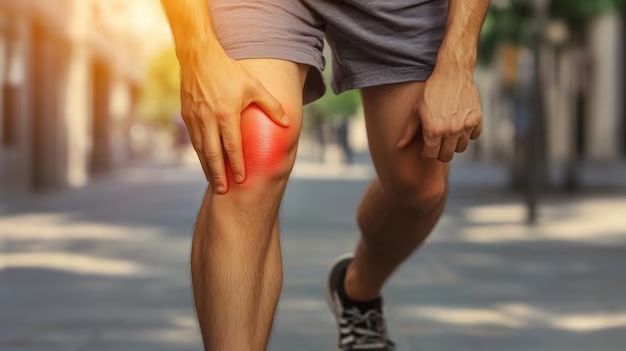
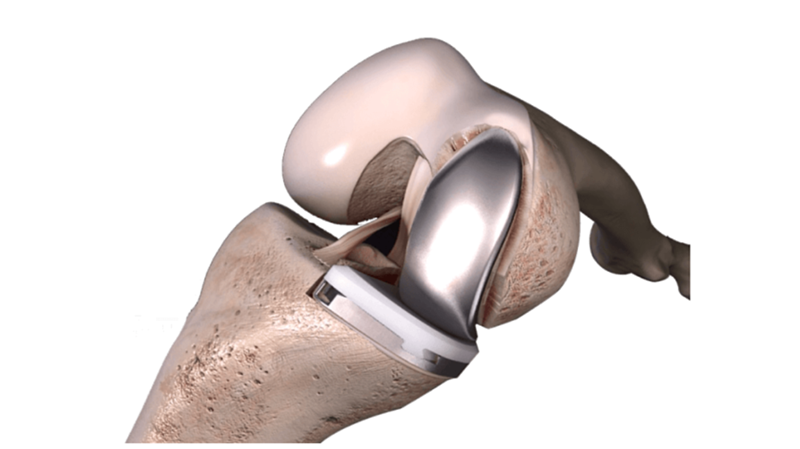
A partial knee replacement (also called a unicompartmental knee replacement) is an operation where only the damaged part of the knee joint is replaced with a prosthetic implant. The healthy parts of your knee, including ligaments and undamaged cartilage, are preserved.
This means:
It is commonly recommended when arthritis affects only one compartment of the knee rather than the whole joint.
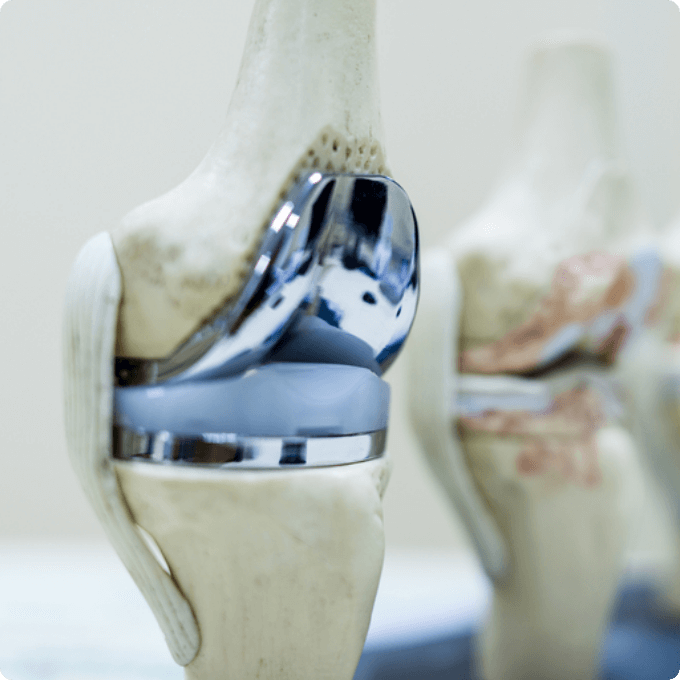
A detailed assessment, examination and imaging will determine whether a partial knee replacement surgery is suitable for you.
You may benefit from a partial knee replacement if:
It is not suitable for everyone, which is why accurate diagnosis is essential. We are here to help you find the best solution specifically for you.
Book A Consultation With Mr Pierre Nasr
Understanding the partial knee replacement operation helps reduce anxiety.
Your journey begins with a specialist knee assessment. During this appointment, your surgeon will discuss your symptoms, medical history and how your knee pain is affecting your daily activities. This typically includes:
Non-operative treatment options, such as physiotherapy, weight management, activity modification, medications and injections, will also be discussed where appropriate. If surgery is being considered, your surgeon will explain the potential benefits, risks and expected outcomes to help you make an informed decision.
Many patients are walking on the same day or the next day.
A major concern for most patients is partial knee replacement recovery. Because this is a less invasive procedure than total knee replacement, suitable patients often experience a faster early recovery. Many people notice significant improvements within the first few months, although recovery continues beyond this period and further gains in strength, comfort and function can occur for up to 12 months after surgery.
While everyone heals differently, general guidance includes:
Many patients experience:
Most patients make good progress during the first few months after surgery, but it is important to remember that recovery is an ongoing process. Improvements in mobility, strength and overall knee function can continue for up to 12 months.
Physiotherapy plays an important role in strengthening the knee, restoring movement and helping patients regain confidence throughout recovery.
A partial knee replacement is not suitable for everyone, but it can be an excellent option for carefully selected patients.
You may be a good candidate if:
A partial knee replacement may not be suitable if:
The best way to determine whether a partial knee replacement is the right option is through a specialist knee assessment, including a detailed examination and imaging studies. If a partial knee replacement is not suitable, alternative treatments, including total knee replacement, can be discussed.
Led by Mr Pierre Nasr, our team specialises in advanced knee surgeries, including both partial and total knee replacements.
We utilise the latest innovations, such as computer-navigated knee surgery, ensuring precision and optimal outcomes.
From consultation through rehabilitation, we provide a supportive, personalised approach to help you recover quickly and effectively.
Our dedication to outstanding care is evident in the stories of our patients. Explore how our treatments have significantly improved lives, offering relief and restoring mobility for individuals just like you.
Living with knee pain is exhausting, physically and mentally. If you’ve been told you may need surgery but are unsure whether a full knee replacement is necessary, a partial knee replacement could be the solution.
Clear diagnosis. Personalised advice. No pressure.
Not necessarily better, but better suited for certain patients. If arthritis is limited to one area, partial replacement can offer faster recovery and more natural movement.
Some discomfort is expected, but many patients report less pain compared to total knee replacement and less pain from pre-operation.
The replaced area will not develop arthritis again, but other parts of the knee may progress over time.
Low-impact activities such as walking, cycling and swimming are usually encouraged once strength returns. High-impact sports may not be recommended.
Yes, structured rehabilitation improves outcomes and speeds up recovery.
Many partial knee replacements last 10–15 years or longer. Longevity depends on activity level, weight, and the condition of the rest of the knee.
Yes. If arthritis progresses in other parts of the knee, a partial knee replacement can be revised to a total knee replacement in the future.
It is a smaller operation. Less bone and soft tissue are disturbed, which often leads to a quicker recovery and a more natural-feeling knee.
Many patients report that a partial knee replacement feels more natural than a total knee replacement, as the ligaments and unaffected parts of the knee are preserved.
Most patients can return to driving at around 3–4 weeks, once they are comfortable and able to perform an emergency stop safely.
Most patients stay one night, and some may go home the same day depending on recovery and support at home.
In general, yes. Because it is less invasive, patients often experience less pain and a quicker early recovery.
Risks include infection, blood clots, stiffness, ongoing pain, or progression of arthritis in other parts of the knee. These are uncommon and carefully minimised.
Many patients are able to kneel after recovery, although it may feel unfamiliar at first. Comfort usually improves with time.
No. Suitability depends more on the pattern of arthritis, knee stability, and overall health rather than age alone.













© 2026 Northampton Hip and Knee Clinic. All rights reserved. Registered Number: 10536384
Website Design & Marketing by Loop Digital.